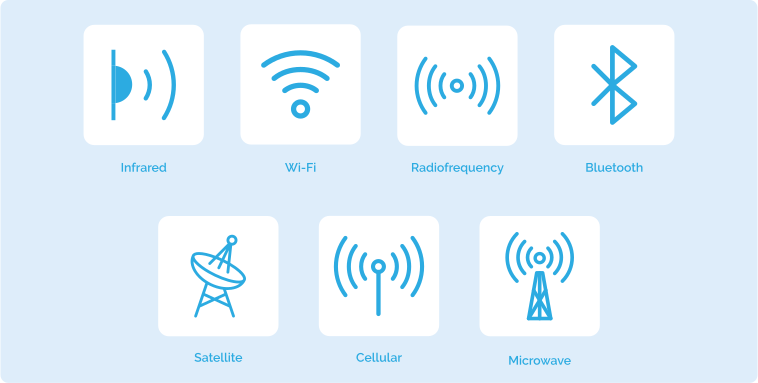
The Evolution of Wireless Technology: From 1G to 5G and Beyond
The evolution of wireless technology has been nothing short of revolutionary. Starting from the first generation, 1G, which primarily facilitated voice calls in the early 1980s, we saw a significant leap into the digital realm with 2G in the 1990s, introducing SMS and data services. The advancement continued with 3G technology in the early 2000s, which enabled faster data transmission and internet access on mobile devices. The introduction of 4G, launched around 2009, marked a game changer, providing high-speed internet that facilitated streaming, gaming, and a host of mobile applications, ultimately transforming how we interact with the digital world.
As we entered the era of 5G, the focus shifted to not just speed, but also to latency and connectivity for the Internet of Things (IoT). 5G technology offers unprecedented data rates and promises to connect billions of devices seamlessly, paving the way for innovations such as autonomous vehicles and smart cities. But the evolution doesn’t stop here; researchers are already exploring 6G, which is expected to bring even faster speeds, enhanced performance, and new capabilities that will further integrate technology into our daily lives. It is clear that the future of wireless technology holds limitless potential, reshaping the very fabric of society.
Counter-Strike is a popular multiplayer first-person shooter game that has captivated gamers since its release. Players can choose between two teams, terrorists and counter-terrorists, and engage in combat across various maps. The game emphasizes teamwork, strategy, and skill, making it a staple in the esports community. For those looking to enhance their gaming experience, check out the Top 10 Wireless Chargers for Pixel Devices to keep your equipment charged during intense gameplay.
How Wi-Fi 6 is Transforming Our Connected Lives
Wi-Fi 6 represents a significant leap in wireless technology, transforming our connected lives by delivering faster speeds, increased capacity, and reduced latency. With the ability to support a multitude of devices simultaneously, this next-generation technology allows households and businesses to operate seamlessly in a world where the number of connected devices is rapidly increasing. From smartphones to smart home appliances, Wi-Fi 6 is designed to manage the heightened demand for connectivity without compromising performance. As more devices come online, the enhanced efficiency of Wi-Fi 6 ensures that users enjoy smooth streaming, quicker downloads, and a more reliable connection.
Beyond just speed enhancements, Wi-Fi 6 brings innovations such as OFDMA (Orthogonal Frequency Division Multiple Access) and MU-MIMO (Multi-User Multiple Input Multiple Output) technologies, which optimize the way data is transmitted. This functionality greatly benefits environments with high device density, such as homes, offices, and public spaces. As a result, users experience decreased buffering times and improved overall network efficiency. Overall, the transformative impact of Wi-Fi 6 on our connected lives is evident, as it paves the way for smarter homes and more connected lifestyles, enabling new possibilities in how we interact with technology daily.
What to Expect from the Future of IoT and Seamless Connectivity?
The future of IoT (Internet of Things) and seamless connectivity is brimming with possibilities that will transform both our personal and professional lives. As advancements in technology continue to unfold, we can expect a world where devices communicate effortlessly, sharing data in real-time to enhance efficiency and convenience. The integration of 5G networks will play a pivotal role in this evolution, significantly increasing connection speeds and reliability. This swift communication will empower innovations in various sectors such as healthcare, manufacturing, and smart homes, creating an interconnected ecosystem where everything from appliances to vehicles works harmoniously.
Furthermore, the future landscape of IoT will likely emphasize security and user experience. As more devices become interconnected, concerns regarding data privacy and security will intensify, prompting the development of advanced encryption methods and smart protocols. Additionally, we can anticipate the emergence of more intuitive interfaces that enable users to control their environments with ease. The implementation of artificial intelligence alongside IoT will pave the way for predictive analytics, allowing users to anticipate needs and automate tasks for an even more seamless lifestyle. In conclusion, the fusion of IoT and seamless connectivity promises an era of unprecedented convenience, efficiency, and security.